Share your favorite music from SoundCloud on your site. The app makes it easier than ever to display tracks, playlists and podcasts. Just paste a URL or embed code from SoundCloud into your player and connect.
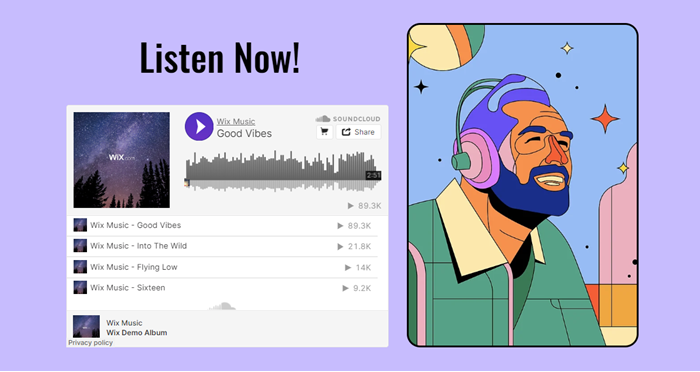
Step 1 | Add the SoundCloud app
First add the SoundCloud app to your site. Afterwards, you can link to your music and customize the player's settings and design.
Wix Editor
Click Add Apps

on the left side of the editor.
Search for the SoundCloud app in the search bar.
Click Add to Site.
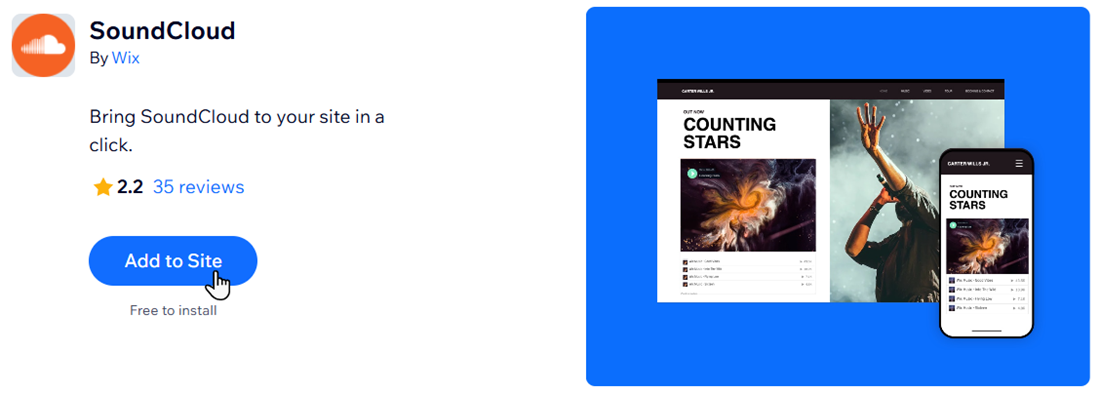
Click Agree & Add to confirm.
Studio Editor
Click App Market

on the left side of the editor.
Search for the SoundCloud app in the search bar.
Click Add to Site.
Click Agree & Add to confirm.
Dashboard
Go to the Wix App Market in your site's dashboard.
Search for the SoundCloud app in the search bar.
Click Add to Site.
Select the relevant site and click Continue.
Click Agree & Add to confirm.
Step 2 | Add the SoundCloud URL or embed code
Next, retrieve the URL or embed code of the track, album or playlist, and add it to the player on your site.
To add a SoundCloud URL or code:
(In your SoundCloud account) Search for the music you want to add.
Click Share.
Click Share or Embed.
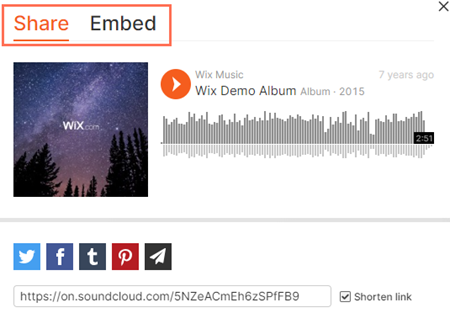
Copy the URL or code.
(In your editor) Click the SoundCloud player.
Click Settings.
Paste the URL or code.
Click Confirm.

Step 3 | Set up your player
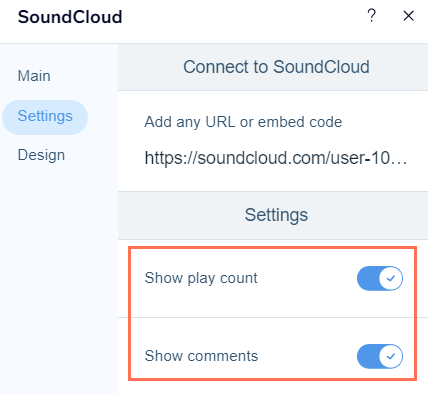
Now it's time to choose what your SoundCloud player shows to visitors. You can display how many times the song has been played and any comments left by SoundCloud users.
To adjust the player's settings:
Click the SoundCloud player in your editor.
Click Settings.
Click the relevant toggle to show or hide the play count and comments.
Step 4 | Design your player
Lastly, customize your SoundCloud player's look to best compliment your site's design.
To customize the player's design:
Click the SoundCloud player in your editor.
Click Settings.
Click Design.
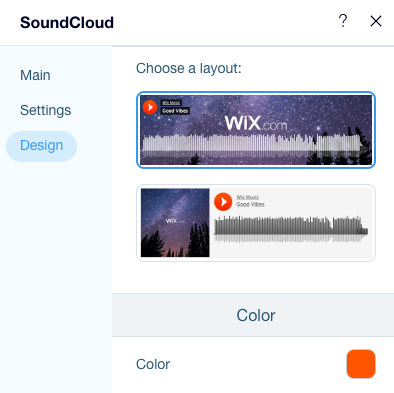
Choose what you want to customize:
Choose a layout: Select a layout that works best for you.
Color: Chose a color for the play button of your SoundCloud player.
Troubleshooting SoundCloud player issues
Click an issue below to learn how to solve it:
You see an error message in the editor
You may see the following message on the SoundCloud player in the editor:

To resolve this, make sure you have turned on the "display embed code" option in your permission settings at Soundcloud.com.
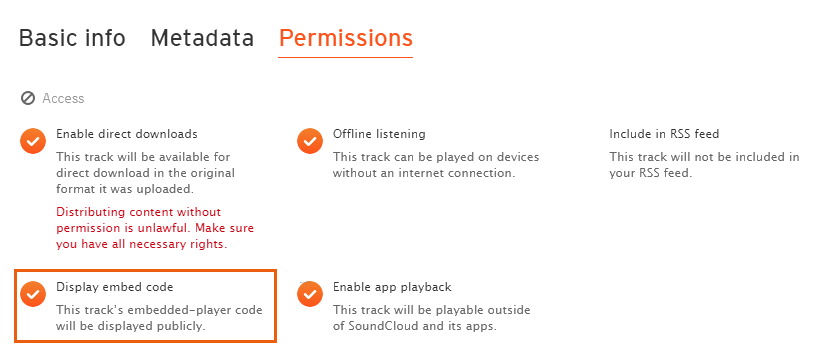
Tip: You can test this by entering your Soundcloud track URL in an incognito window on your browser.
Music isn't playing
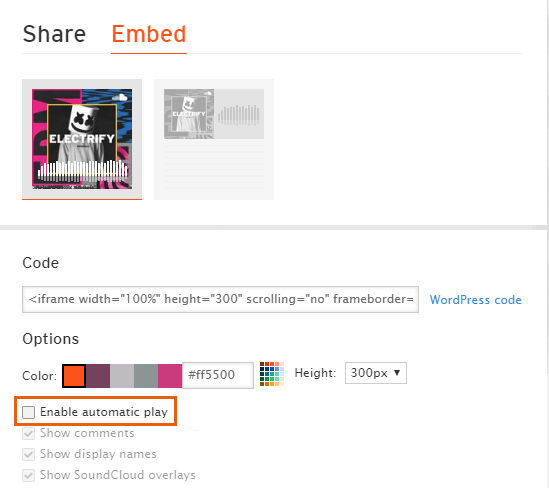
If you are embedding HTML code to the SoundCloud Player, make sure that autoplay is unchecked in the embed settings at Soundcloud.com:
Learn more about browsers and autoplay.
What information should I include if I need to reach out for assistance?
For us to best assist you, it helps to have the following information ready:
The name and version of the web browser you're using
The name and version of your computer's operating system
A description of the steps you've taken and what happened
A screenshot of the issue
A screenshot of your console view (see below for steps)
How do I take a screenshot of my console view?
Open an incognito window in Google Chrome (Ctrl + Shift + N).
Sign in to Wix and open your editor.
Go to the area where you noticed the issue and try to repeat the steps.
Press Ctrl + Shift + J (PC) or Cmd + Option + J (Mac) to open the Console.
Tip: If the shortcut doesn’t work, right-click the page and select Inspect.
Click the Console tab at the top, then press F5 to refresh the page.
Take a screenshot of this tab.
This article is credited to the Wix team - https://support.wix.com/ and we thank them for that!